Flip the Vowel is a simple yet powerful strategy that helps early readers gain independence. Teaching young readers to decode unfamiliar words is a big step toward reading independence. This strategy teaches students to try both the short and long vowel sounds when decoding, although advanced readers know there are other vowel options to consider. First, early readers use it with one-syllable words, but eventually use it with each syllable in a word. By flipping the vowel sound, students develop flexibility and confidence in their reading skills.
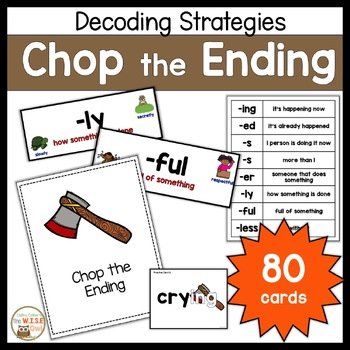
I have previously discussed decoding strategies for helping young readers with automaticity, sound and slide blending, find the chunk, and chop the ending.
What is flip the vowel?
Vowels are so tricky. There are 44 sounds in the English language and there are only 26 letters, as you know. Vowel sounds make up twenty of those 44 sounds. It is crucial that students are explicitly taught about different kinds of vowels, starting with short vowels.
Many early readers first learn that vowels often make their short sounds. My students would echo letters and sounds each day, with the vowel practice being with the short vowel sounds (a, /a/, apple, e, /e/, Ed, i, /i/, igloo, o, /o/, octopus, u, /u/, umbrella.
When we started blending, we started by using regular, short vowel words with CVC (consonant-vowel-consonant) pattern like cat, hop, and pet.

However, as they encounter more words, they need to recognize that vowels also make their long sounds—especially in words with a silent e (CVCe pattern) like cake, hope, and Pete.
The “Flip the Vowel” strategy teaches students to:
- Look for the vowels.How many vowels do you see?
- If you see one vowel IN the word, let’s try the short sound first. (If the vowel is at the end of the word, it’s an open syllable, so we’ll have to try long.)
- If you see more than one vowel IN the word, let’s try the long sound first.
- If that doesn’t work, flip the vowel to the “other sound.”
By practicing this strategy, students learn to adjust their decoding approach instead of getting stuck on an incorrect pronunciation.
Why is this strategy important
Beginning readers often struggle when they assume a vowel makes only one sound. When they don’t recognize a word immediately, they may guess or skip it. Teaching them to flip the vowel gives them a simple, effective tool to self-correct and decode words independently.
Giving students a strategy helps them stop guessing and keep working. However, this strategy is never taught in isolation, it’s taught as a part of a strategy toolkit.
Teaching flip the vowel

Introduce with a Picture or Cue
Using a picture cue can help students use the cue independently. The cue I created was of a gymnast doing a flip.
Create an Anchor Chart
Create a Flip the Vowel anchor chart showing examples of words with both short and long vowels. Use pictures to help students understand meaning:
can –> cane
pet –> Pete
Explain that when a vowel is followed by a silent e, the vowel says its long name.
Teacher tip: Instead of saying “e makes the vowel say its name” to remind students of the final e role in CVCe words, say the specific vowel. Example, while cueing the word “cave,” I would say, “e makes the a say a.” This allows the student to say the name quickly and read the word more fluently. When we say, “a makes the vowel say its name” developing readers may think to themselves, “What is the name? Is it /a/ like apple or /a/ like acorn?” They are adding a step into the decoding process.

Model the Strategy
Write a word like hop on the board. Say:
💡 “Let’s sound this out: /h/ /ŏ/ /p/. Does that make sense? Now let’s add an e—what happens? /h/ /ō/ /p/ (hope)! We flipped the vowel sound and found a real word!”
Repeat with several words, asking students to help decide if flipping the vowel creates a real word.
Practice with Word Cards
1. Give students word cards where they read the CVC word first, then flip the vowel to make a CVCe word.
2. Give students word cards with short vowel on one side and the long vowel on the other. Students would need to “flip” the card over to read the long vowel word.
3. Give students two sets of cards—one with CVC words and one with their CVCe counterparts—so students can match them.

Apply in Reading & Writing
Encourage students to use the “Flip the Vowel” strategy when reading texts. Using decodable sentences with both the short and long vowel pairs, have students practice decoding and flipping the vowel. During writing, help them stretch out words and decide if a silent e is needed to make the correct word.
By making “Flip the Vowel” a regular part of your phonics instruction, you’ll empower your young readers to tackle new words with confidence. Try this strategy in your classroom and watch your students’ decoding skills grow!
Check back next week for another decoding strategy with vowels, Flex the Sound.

Recommended decoding products
-

Flip the Vowel (Bossy “e”) Decoding Strategies CVC v CVCe Science of Reading
$6.00 -
Decoding Strategies Chop the Ending Suffixes Root Words and Base Words
$3.75 -
Find the Chunk Reading Decoding Strategies SOR Posters and Small Group Lessons
$3.75 -
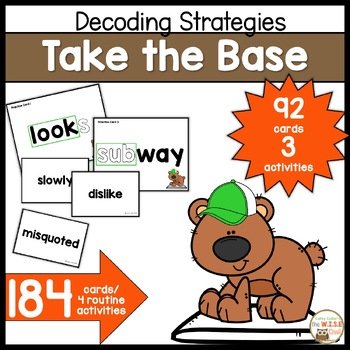
Find the Base Word Decoding Strategy Lessons and Cards
$3.00