
Daily journals can be an essential piece of writing practice is for young learners in kindergarten and first grade. Writing journals provide a structured yet flexible way to reinforce foundational skills while encouraging creativity. However, the key to journals is consistency. By incorporating journal writing into your daily routine, you can support students in building confidence and fluency in their writing.
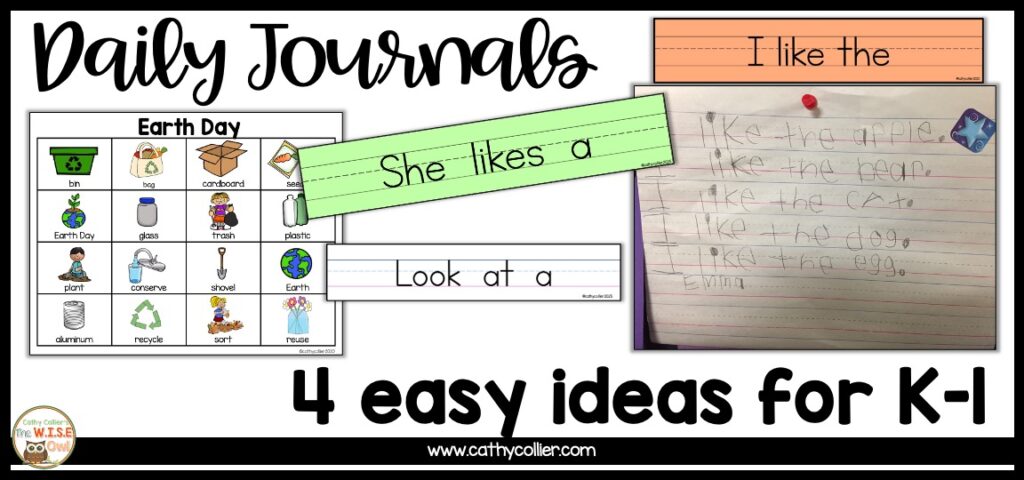
Each day when students came into my room, their first assignment was journal writing. After unpacking their book bags, they would get their journals, choose a sentence starter, and choose a topic card (the explanation is below). As the year progressed, the writing expectations also progressed. The best part is my students knew they would write every day and they knew how to do it. I taught the process of matching a sentence starter with a topic card equalled a topic sentence.
Why are daily journals important?
In the Jan/Feb 2016 The Reading Teacher, Graham & Harris talk about the role of teachers in the early grade with regards to writing. “How can you, as an elementary-grade teacher, help your students begin and successfully navigate the path the greater writing competence? The answer is relatively simple: Devote time to the teaching of writing and use this time wisely.
Research shows children become better writers when they write and children who are provided time to practice every week have greater gains than those we do not (Graham, Kiuhara, et al., 2012).

- Builds Writing Fluency – Daily journaling helps young learners develop confidence and fluency in writing by providing consistent practice in forming letters, words, and sentences.
- Strengthens Phonics and Spelling – Writing in journals allows students to apply phonics skills, high-frequency words, and spelling patterns in context, reinforcing literacy instruction.
- Encourages Creativity and Expression – Journals give students a space to express their thoughts, ideas, and experiences, fostering creativity and independent thinking.
4. Develops Fine Motor Skills – Regular handwriting practice helps strengthen fine motor skills, improving pencil grip, letter formation, and overall handwriting quality. The more they write, the more they develop a muscle memory of those letters. In William Van Cleave’s article, Writing in a Modern World: Why It Matters and What to Do About It, Berniger (2012) and Graham et al (2009) found that automatized handwriting significantly improves not just the quantity of students’ writing but also its quality.
5. Supports Reading and Comprehension – Writing and reading go hand in hand; by writing daily, students enhance their understanding of sentence structure, vocabulary, and the connection between spoken and written language.
4 ideas for daily journals
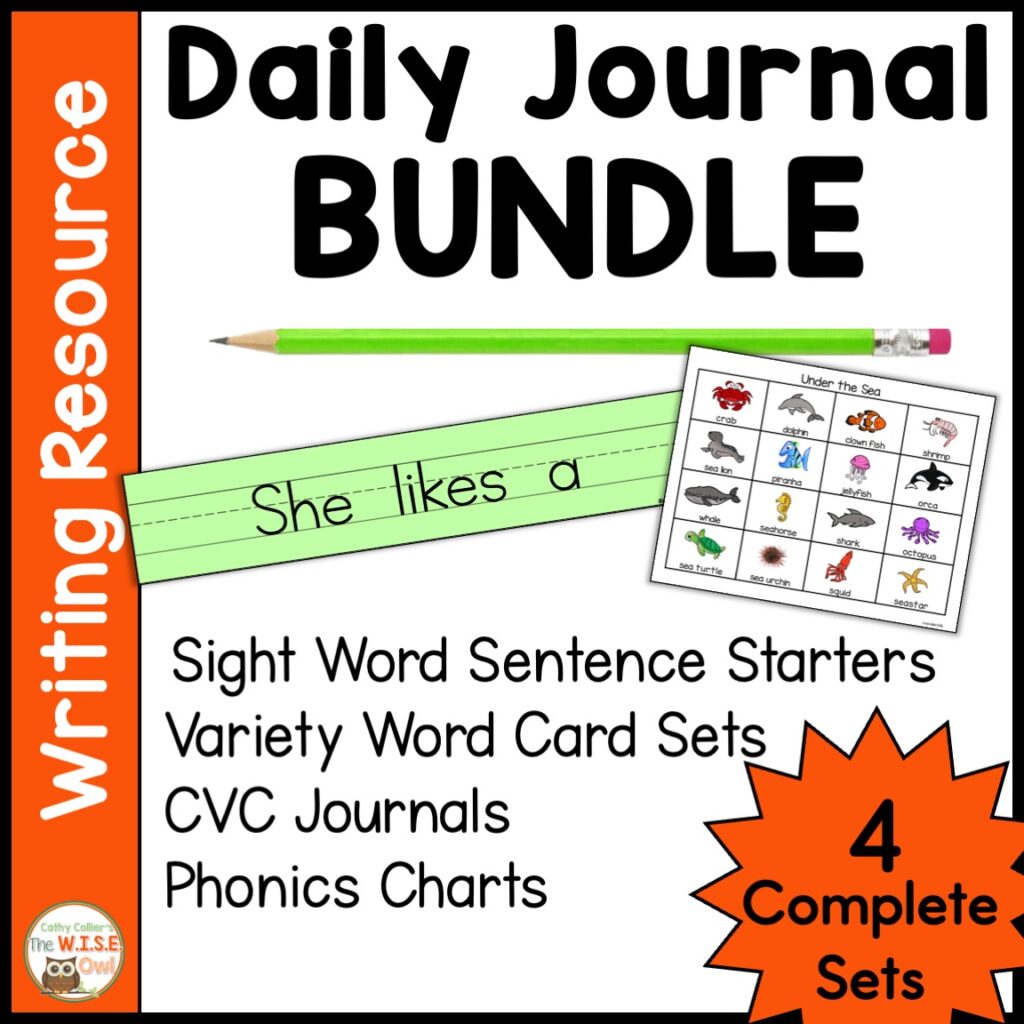
sentence starters and topic cards
AFTER the sight words have been introduced, I make (or print) the sentence starter on card stock. Sentence starters are added to a basket for daily journals.
Sentence starters and topic cards help students overcome the fear of a blank page by giving them a starting point.
Provide a simple sentence starter or a basket of sentence starters such as “I like to…” or “Look at my…” and allow students to complete the sentence with the help of a topic card.

Topic cards can include pictures or words related to themes, seasons, or classroom topics.
Students start by adding the sentence starter and topic card together to make a sentence. Each day they get proficient at creating a sentence. When they have demonstrated this capacity, they are asked to add more details (color, size, position, setting).
word card journals

Word cards are a fantastic tool for expanding vocabulary and encouraging topic-based writing. Create a set of word cards with 12-20 words, focusing on seasonal themes, science or social studies topics, or high-frequency words.
Each day, students can pick a word and write a sentence or a short story about it. Alternatively, they can use multiple words from the set to create different journal entries throughout the month.
This practice helps students make connections between words and ideas, while also building confidence in using new vocabulary in their writing.
A blog post about 25 ways to use word cards is here.
Word cards can also be used in connection with sentence starters from the first entry.
CVC Daily journals
CVC (consonant-vowel-consonant) words are a great way to bridge phonics instruction with writing. Provide students with a picture of a CVC word (such as a cat, sun, or bed) and have them build the word using letter tiles or by sounding it out. Then, students will use the word in a sentence and illustrate it.
Another way to create CVC Journals is through pre-made pages with boxes and pictures. Students write the CVC word, add illustrations the picture with a pencil, write a story, and color the story (this order helps students write before coloring).
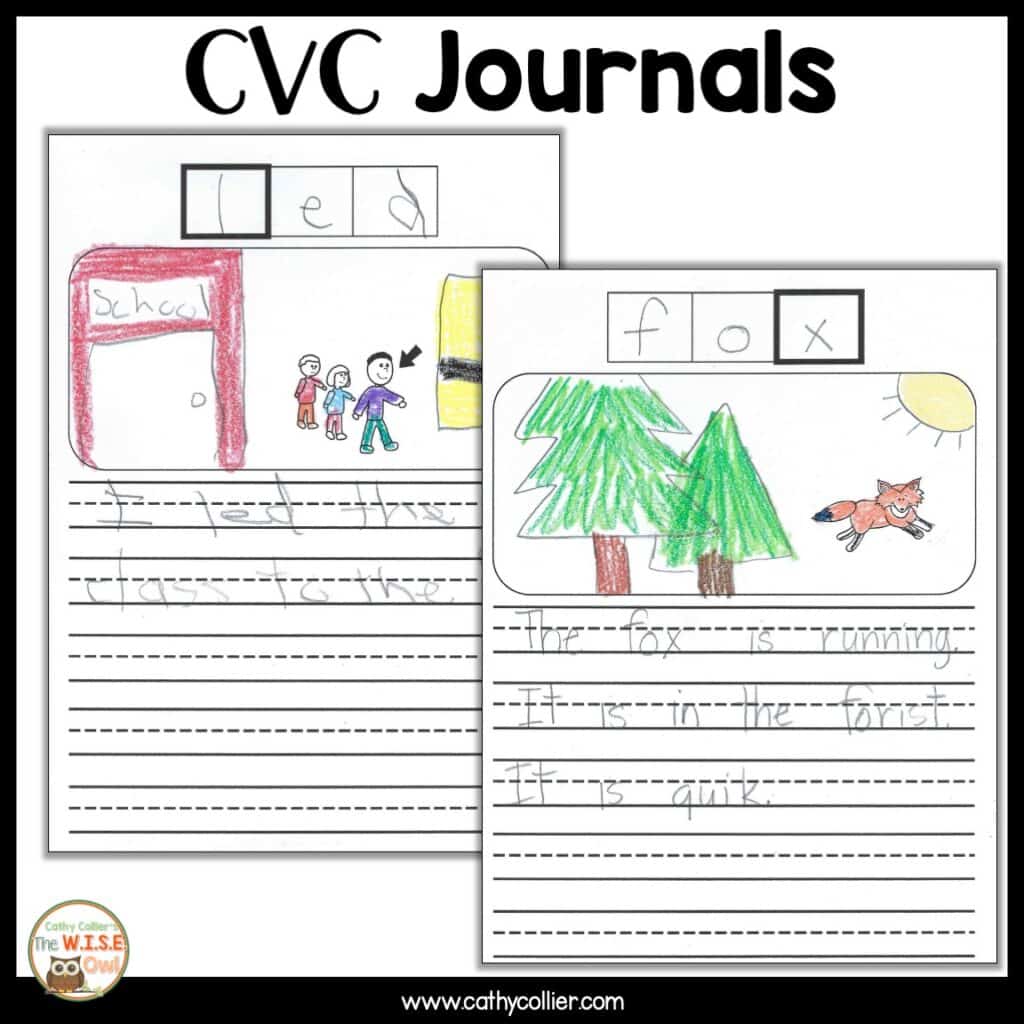
This activity reinforces letter-sound relationships, builds vocabulary, and helps students see themselves as writers even at an early stage. As students progress, they can extend their writing by adding descriptive words or combining sentences.
Phonics-Based Sound Charts or Word Charts
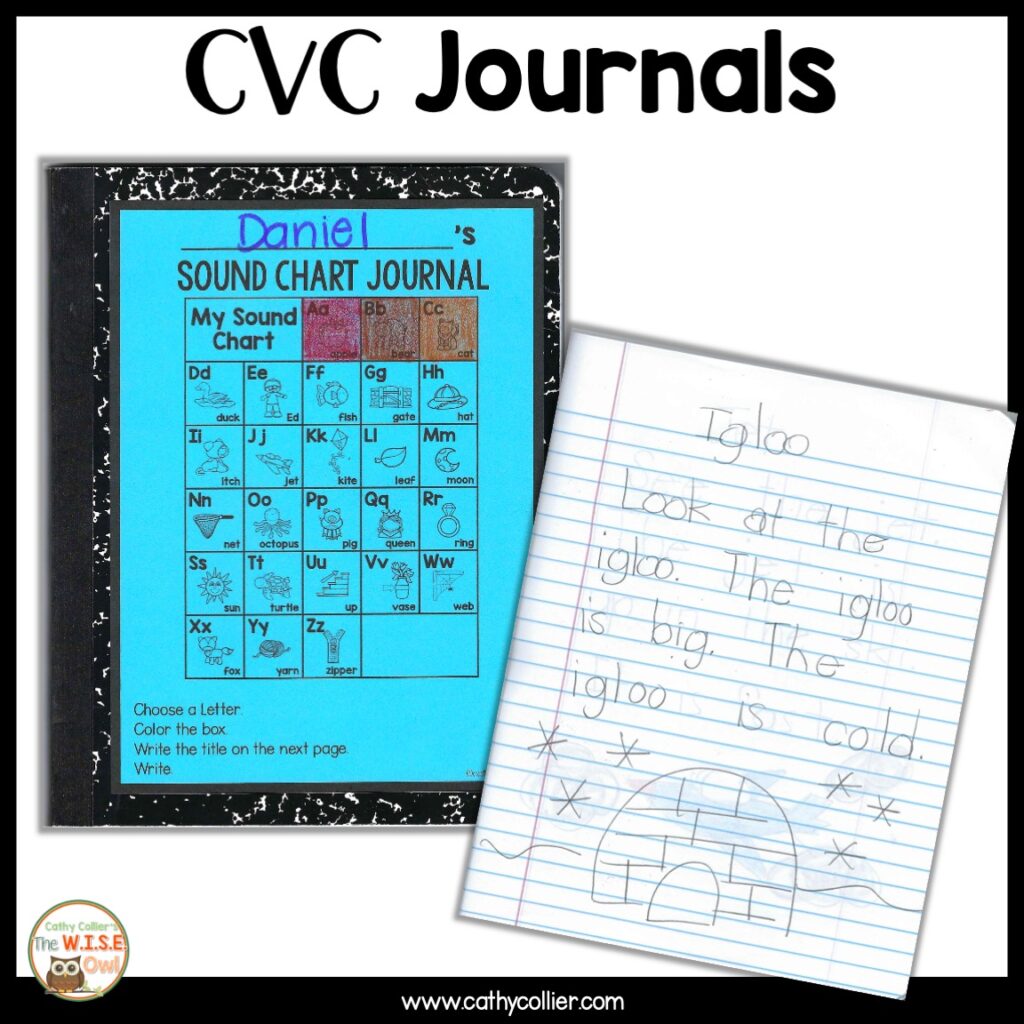
Phonics-based journals allow students to apply their phonics knowledge in a meaningful way.
Provide a word chart that focuses on a specific phonics pattern, such as short vowels, blends, or digraphs.
Students can choose a word from the chart and use it in a sentence or write a short story incorporating multiple words. Sentence starters can be used with idea, as well.
This activity not only reinforces phonics skills but also encourages students to recognize spelling patterns in their writing.
As they become more comfortable, they can experiment with writing longer sentences and using words in context more naturally.
Incorporating daily writing journals in K-1 classrooms fosters independent writing skills, strengthens phonics and vocabulary, and encourages creativity. By using sentence starters, word cards, CVC word journals, and phonics-based sound charts, you provide a structured yet flexible way for students to practice writing every day.
Read a full explanation of this idea HERE.
Everything you need
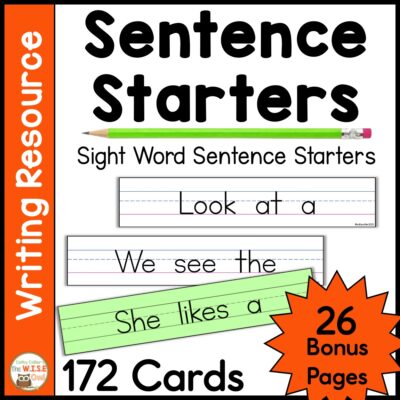
The Daily Journal Bundle has everything you need, including the Sentence Starters. If you’d just like the sentence starters, click the pictures below.
These simple yet effective strategies will help young learners build confidence, develop essential literacy skills, and see themselves as authors from the very beginning of their writing journey!
If you would like to see the Sight Word Sentence Starter set, check it out here.


